CSU at a glance
Also calledChronic hives
Typical duration6 weeks or more
Common experienceItchy welts that come and go
Who can get it?Anyone, at any age

CSU - Towards an itch free future together

Clear answers, practical support, and confidence for every step of your CSU journey.
CSU can feel unpredictable. This hub helps you understand symptoms, explore treatment conversations, and find simple ways to feel more in control.

Understanding CSU
Chronic spontaneous urticaria is a condition that causes itchy hives, swelling, or both for six weeks or longer—often without a clear external cause.
Even when a trigger is not obvious, symptoms are valid. A healthcare professional can help rule out other causes and create a plan that fits your needs.

Possible influences
CSU is not caused by one thing. These factors can sometimes worsen symptoms for some people.
An overactive immune response may play a role in CSU.
Warmth, tight clothing, or pressure can aggravate skin.
Stress does not cause CSU, but may make flares feel worse.
Discuss possible medicine-related flares with your doctor.
Illness can occasionally coincide with a symptom flare.
A symptom diary can help you notice your own patterns.
A clinician can help you understand symptoms and discuss treatment options.
Clear up the confusion
Accurate information can make CSU feel less overwhelming.
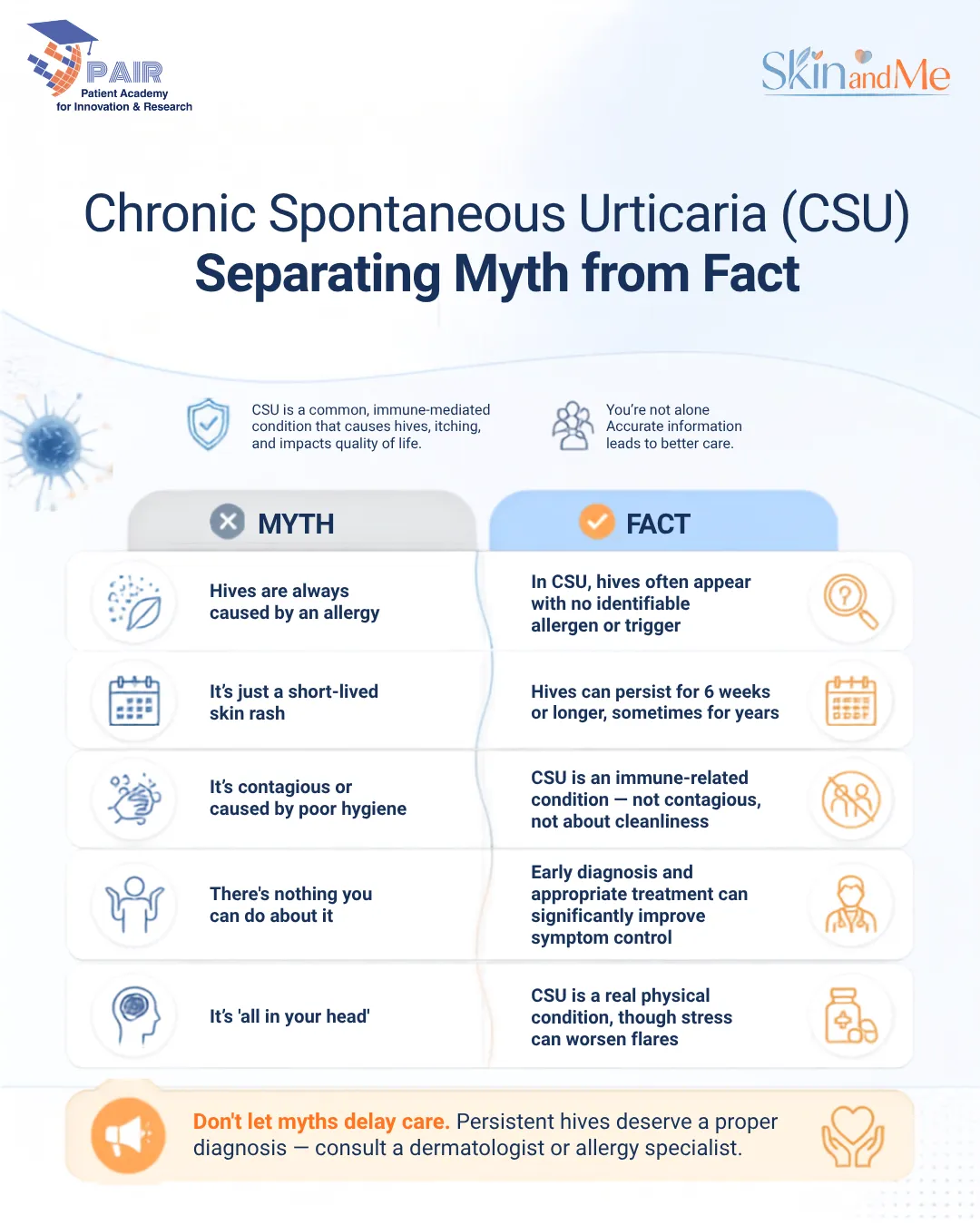
❌ MYTH
“CSU is always caused by an allergy.”
✅ FACT
Often, there is no single allergy or obvious outside cause.
❌ MYTH
“Hives are just a cosmetic problem.”
✅ FACT
CSU can affect sleep, focus, mood, and everyday confidence.
❌ MYTH
“Nothing can help chronic hives.”
✅ FACT
There are treatment options and supportive habits to discuss.
Build your care plan
Treatment is personal. Your healthcare professional can guide you toward the right next step.
Note timing, symptoms, and possible patterns.
Share how CSU affects your everyday life.
Ask about suitable medicines and care approaches.
Keep your care plan aligned with your needs.
1Wear loose, soft clothing: Breathable cotton and non-tight fits reduce pressure and friction on the skin; pressure can trigger flares in some people.
2Keep skin cool : Cool compresses or a lukewarm shower can calm hives and itching; avoid hot water, which tends to worsen them.
3Manage stress gently Stress is a common aggravator, so calming routines like slow breathing, light walks, or good sleep hygiene can help reduce flare frequency.
4Track and avoid triggers Keep a simple diary of flares alongside heat, stress, tight clothing, certain foods, NSAIDs, or infections to spot patterns worth avoiding.
Your questions answered
No. CSU is not contagious, and you cannot pass it to another person through contact.
Food is not the cause for most people with CSU. Avoiding foods without medical guidance may not help, so discuss concerns with your clinician.
An individual hive often fades within 24 hours, while new hives may appear elsewhere.
Photos and a symptom diary can be useful to share with a healthcare professional, especially if symptoms come and go.
Share & spread awareness
Simple, shareable visuals to help you and your loved ones understand CSU better. Feel free to save and share these with your community.